1937:
1942:
1944:
1947:
1948:
1950:
1962:
1976:
1995:
filmography
main site
___________________________________________________
1908-1995 Actor
books | dvds | posters | videos
new powell/pressburger online shop
small back room uk dvd
late edwina black dvd
key dates
1908:
Born 21 August in Forest Gate, London
Uncredited film debut role in Return of a Stranger
Appears in the wartime drama Went the Day Well. A risky role as he plays a Nazi posing as a British officer
Appears in the Ealing films Headline & For Those in Peril
Appears in Michael Powell/Emeric Pressburger Black Narcissus
Appears in The Small Back Room
Appears in Gone to Earth
Appears in 300 Spartans and retires from films at the relatively young age of 52
His wife, Irene Elliot, dies, leaving a daughter, Barbara
Dies in Durban, South Africa, his home for many years, on 31 August, 10 days after his 87th birthday


did you know?Part of the reason Farrar retired from films when he was just over 50 was because he was no longer getting offered the parts of the lovers!!
links
___________________________________________________________________________

-
1940s/50s British actor
- The Late Edwina Black Dvd
- The Small Back Room UK Dvd
- David Farrar is one of the biggest enigmas of British cinema. Other than his screen performances, he left so little of himself that today he is almost forgotten, remembered if at all as just a footnote in the annals of the golden years of British film. His granite-like, impenetrable features gave us few clues as to what was going on inside of him; his career was always so nearly ready to take off but never near enough. Other than the films in the 40s for Michael Powell and a few other parts his legacy is not really worthy of his talent. And in his early 50s he retired, gave it all up, stating the shallowest of reasons for his departure and just disappeared. That was in the early 1960s and by the time of his death in 1995 the world by and large had so forgotten him that the news caused barely a ripple. That was then and this is now. Farrar was a great actor and a re-appraisel of his work is long overdue.
2016: Forever Ealing Book Reviewed, Photos & In Stock
Farrar had started out mainly in costume plays in the early to mid-1930s. Around 1935, Victor Hanbury, head of RKO Radio Pictures in Britain, offered him a part in a film they were making at Shepperton Studios. Then followed a long apprenticeship of small parts in big films and big parts in small films until the outbreak of the 2nd World War put a stop to all this.
Farrar's first big break came when he was offered the lead in Sheepdog of the Hills (41). In 1942, he got his Army call-up papers just as he was preparing for a film called The Night
Invader in which he'd already been signed to play the
lead. Perhaps it was felt Farrar was more useful
providing entertainment than in soldiering, for the
producers got the War Office to request him to return
his call-up papers.
Then there was the bravest role he would ever untertake in Went the Day Well? (42), directed by the Brazilian Cavalcanti. Brave? Well, just imagine at the height of the biggest war of the century against the most loathed regime of all time that a Jude Law or Ewan MacGregor were transposed back to those times to play a Nazi posing as a British officer. Wouldn't go down well I would have thought and I doubt very much that they would have dared to play such a brutalised role. Well, Farrar did and it is the measure of the man that he agreed to do so knowing the harm it could have done to his career. Went the Day Well? was an Ealing film, with a lot of location
work, including some at Henley, where the actors worked
with a regular Army company. Farrar's fan mail suggested
that, though they were impressed with what they
described as a fine 'acting' performance, they
almost invariably disliked him playing a brutalised
part like this.
After several films for Warner's, he was back at Ealing for Headline (44). It was a thriller with a good script
and set in the newspaper world Farrar knew from his
own journalism days.
Before Headline was finished
he was already contracted to make For Those in Peril
for Ealing. It turned out to be a great film which got
marvellous notices from all the critics. It was about
the Air-Sea Rescue service, which did wonderful
work during the war. Hr had a fine part as the tough
skipper of the launch and they shot this in the
Channel under actual combat conditions. Charlie
Crichton, who directed it and was something of a
sailor, used to like watching the actors go green in a rough
sea. Unhappily, it turned out that the film was not
booked to go into any West End cinema. Perhaps it
was because of its awkward length (it was only
sixty-seven minutes long), too short for a West End
first feature, though it was booked throughout the
provinces. Farrar had given his best film performance
to date, but there were no cables from Hollywood!
Perhaps if it had been padded by a further thirty
minutes and had a feminine interest introduced, it
might have been a success at the box-office as well
as with the critics.
He then made The World Owes Me a Living (44)at Elstree. It was from a
novel by John Llewellyn Rhys, a young author who
was killed during the war, and it was about the
growth of aviation between the two world wars. Cast and crew
spent weeks on location doing the flying sequences
and Farrar enjoyed the experience of playing opposite Judy
Campbell. The director was an unusually inventive
man, Vernon Sewell, the first that he had known to
lay tracks for continual shooting of up to several
minutes.
He then undertook a tour with ENSA of
camps and gun-sites in a play called Jeannie. The film, The Trojan Brothers (46), followed and was taken from a novel by Pamela
Hansford Johnson. It had a powerful subject - the
fatal attraction for a worthless woman of a Cockney
called Sid, who is driven mad by her heartlessness
and finally strangles her. Farrar was all for playing the
film 'as per book' but the producers wouldn't let him
strangle his leading lady and changed it to a happy
ending, despite his protests. However, Farrar treasured a
letter from Miss Johnson which finished by saying,
'I liked your Sid better than mine.' The ABC circuit
snapped it up and it was very popular and financially successful, but as it didn't get a West End
showing it didn't add an inch to his stature.
However, he working with
Bobby Howes in it: they played a horse act, with Farrar
as the forelegs and Bobby as the hindlegs, which led
him to say, 'I feel such an arse!'. Patricia Burke was
his leading lady in both that and Lisbon Story (46). Lisbon Story had had a long run on the London stage, but the film had a new story about Farrar's escapades as an intelligence officer. With the charming and attractive songs the film filled two West End cinemas.
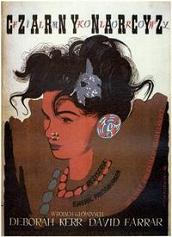
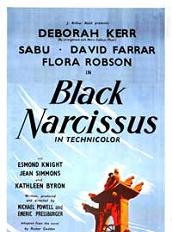
His career entered a new phase with Black Narcissus (47), directed by
Michael Powell/Emeric Pressburger. He was about to sign a Hollywood contract with Universal-International to play Grieg in A Song for Norway, when the phone rang and he was asked if he would like to read the script for
Powell's next picture, Black Narcissus. When Farrar read it it seemed like too good an opportunity to be true. He had a meeting with Powell & Pressburger; there then followed a a period of anxious waiting, then he was asked if he would test for the part of Mr. Dean. It seemed a long time afterwards that Powell told him, "The part is yours," and he never even signed a contract till long after the film was finished.
Farrar saw every day on the making of the film as
an exciting adventure, mainly due to Powell's creative ideas. "The whole thing was an outstanding fully satisfying artistic creation," he said afterwards. Perhaps the most extraorinary thing about this extraoridnary film, and what people who see it to this day can scarcely believe, is that the whole film was shot in the studio, with profiles and smokescreens against the
skyline to give the effect of the dizzy height of the
Himalayas. In some of the 'snow scenes', Sabu and Farrar were wearing bearskin coats in the middle of a heatwave!
He made two further films for Powell & Pressburger - The Small Back Room (49)
and Gone to Earth (1950). These
three films as well as the Ealing films, Frieda , with Mai Zetterling, and Cage of Gold (50), with Jean Simmons were, artistically, the highlights of his career. He was still working on
Mr. Perrin and Mr. Traill when Powell was ready to to start The Small Back Room early in 1948. They shot the location scenes first, in Dorset, where they did the
bomb-defusing sequence which today many think is one of the most thrilling things ever seen on
the screen. It was a long and difficult sequence,
most of it shot at about 5 am in early March with a biting east wind coming in off the
sea. And the artificial foot he wore to play the part of Sammy Rice was so uncomfortable that he couldn't
help limping anyway. But it was a great part and
worth all the discomfort in the end, for once again they had excellent notices.
Frieda was made for Ealing Studios, with some
location work in Oxford. It actually opened to great
success in New York when Farrar was there to publicise
Black Narcissus for the Rank Organisation. Their
premieres were on two consecutive nights. Frieda was a good film and had wonderful notices in both
London, New York and Stockholm.
Before Farrar did Mr. Perrin and Mr. Traill he was unemployed for eight months because of one deal falling through for him to
star in a film version of Precious Bane and
because of The Archers [Powell and Pressburger's
production company] and him not seeing eye to eye
on the character they wanted him to play in The Red Shoes
but, as under his contract he had to be paid for
a film anyway, he agreed to do Mr. Perrin and Mr. Traill , which was a so-so film.
After a busy time in Hollywood and several
more British films in the '50s, Farrar had three
films released in 1960 - Beat Girl, The Webster
Boy and The 300 Spartans - and then retired. He was just over fifty.
He'd played leading roles
in about fifty films and his
flamboyant role as Xerxes for 20th-Century-Fox in
The 300 Spartans played for seven months in
London's West End. He'd always felt the ideal was to
get to the top, stay at the top and get out at the top.
The decision to retire coincided with some problems, not least
the death of his agent, Haddon Mason of Filmrights, who had been his manager for twenty-five
years, leaving him feeling a bit lost. He was tired of the
hassles and battles, and conceit might have come
into it - he'd always been the upstanding young
leading man and he was afraid of parts being hinted
at for uncles or the girl's father instead of the lover!
Farrar just felt 'the Hell with it all', and walked out into
the sunset.
So not content with having his fingerprints over the most beautiful actresses of his generation and getting paid for it he gave it all up,. After his wife, Irene Elliot, died in the mid-1970s, he followed his daughter to South Africa and retired near her in Durban, living there quietly until his death in 1995.
For a time, in the 40s, Farrar's popularity was big in Britain but posterity has seen his name lag far behind that of his peers Stewart Granger, James Mason and David Niven. But I have no doubt that in time this actor will be re-discovered by a new generation and his work restored to the rightful place as among the best in 20th century British cinema.


new powell/pressburger online shop
powell and pressburger vintage film posters @ ebay.com (direct link) - they do appear from time to time