Extraordinary pieces from the Renaissance master | Lenin Imports participates in the eBay Partner Network
Biography
Leonardo di ser Piero da Vinci — Italian painter, sculptor, engineer, scientist, and architect. The most versatile genius of the Italian Renaissance.
Early Life
Leonardo was born on April 15, 1452, in the small Tuscan town of Vinci, near Florence. He was the illegitimate son of a wealthy Florentine notary and a peasant woman, but was brought up in his father's house.
In the mid-1460s the family settled in Florence, where Leonardo was given the best education that Florence, the intellectual and artistic center of Italy, could offer. He rapidly advanced socially and intellectually. He was handsome, persuasive in conversation, and a fine musician and improviser.
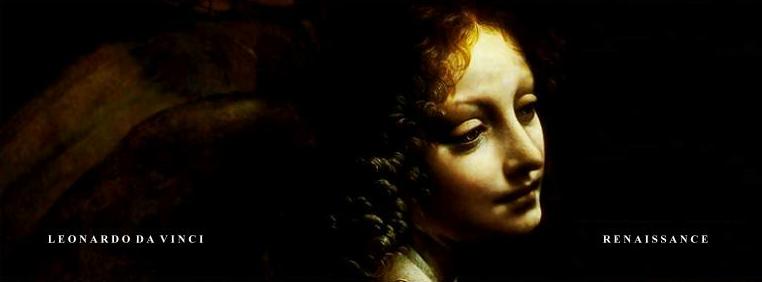
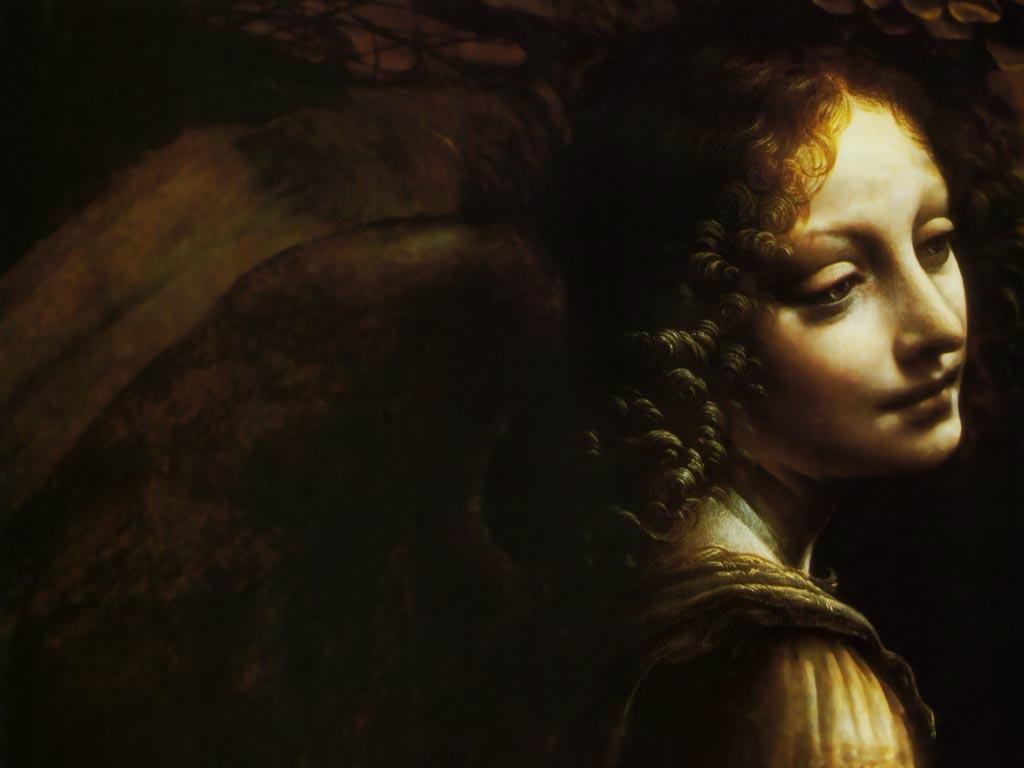
The Virgin of the Rocks – Angel, 1508 (Detail)
Leonardo da Vinci
Apprenticeship with Verrocchio
Around 1466 he was apprenticed as a garzone (studio boy) to Andrea del Verrocchio, the leading Florentine painter and sculptor of his day. In Verrocchio's workshop Leonardo was introduced to many activities, from the painting of altarpieces and panel pictures to the creation of large sculptural projects in marble and bronze.
In 1472 he was entered in the painter's guild of Florence, and in 1476 he is still mentioned as Verrocchio's assistant. In Verrocchio's Baptism of Christ (circa 1470, Uffizi, Florence), the kneeling angel at the left of the painting is said to be by Leonardo, as a result of which Verrocchio gave up painting.
Independent Master
In 1478 Leonardo became an independent master. His first commission, to paint an altarpiece for the chapel of the Palazzo Vecchio, the Florentine town hall, was never executed. His first large painting, The Adoration of the Magi (begun 1481, Uffizi), left unfinished, was ordered in 1481 for the Monastery of San Donato a Scopeto, Florence.
Other works ascribed to his youth are the so-called Benois Madonna (c. 1478, Hermitage, Saint Petersburg), the portrait Ginevra de' Benci (c. 1474, National Gallery, Washington, D.C.), and the unfinished Saint Jerome (c. 1481, Pinacoteca, Vatican).
Milan Period
About 1482 Leonardo entered the service of the Duke of Milan, Ludovico Sforza, having written the duke an astonishing letter in which he stated that he could build portable bridges; that he knew the techniques of constructing bombardments and of making cannons; that he could build ships as well as armored vehicles, catapults, and other war machines; and that he could execute sculpture in marble, bronze, and clay.
He served as principal engineer in the Duke's numerous military enterprises and was active also as an architect. In addition, he assisted the Italian mathematician Luca Pacioli in the celebrated work Divina Proportione (1509).
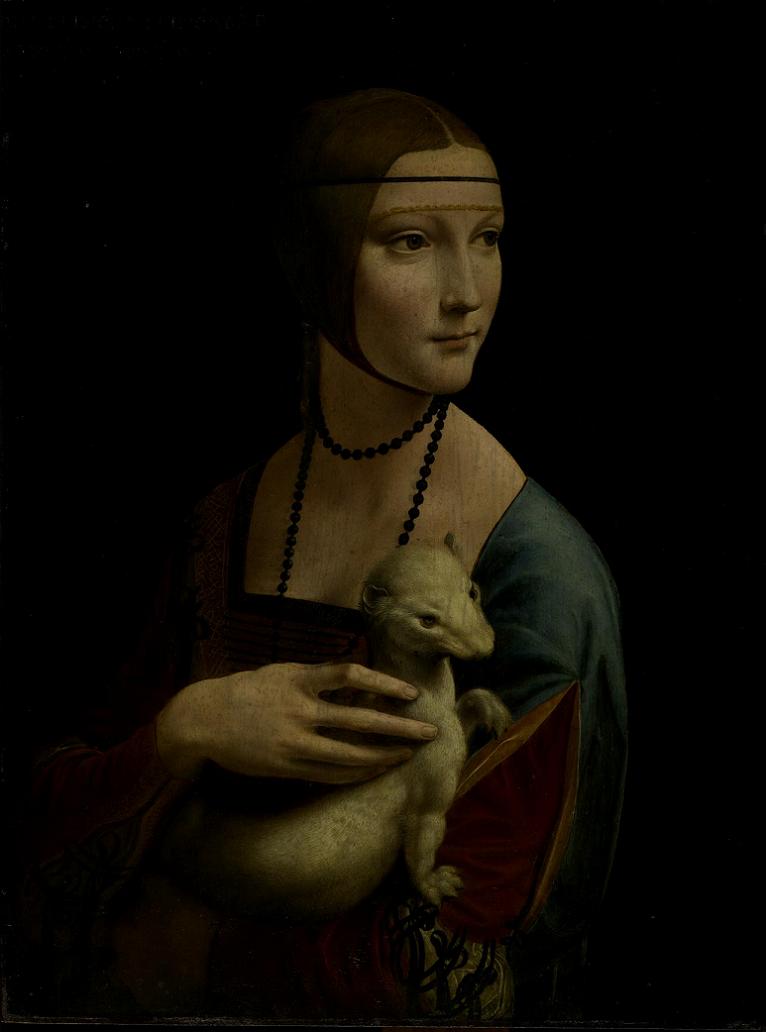
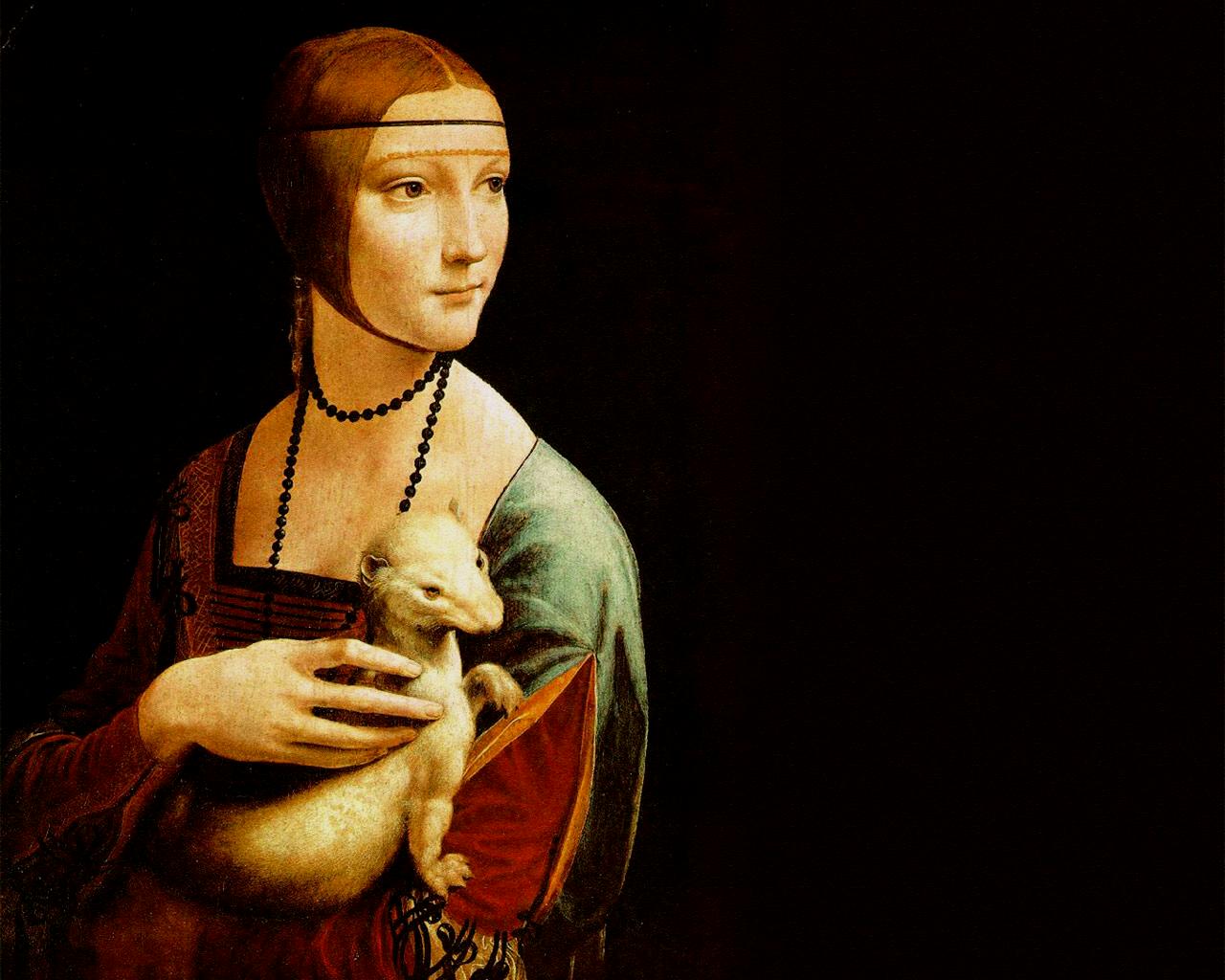
Lady with an Ermine
Leonardo da Vinci
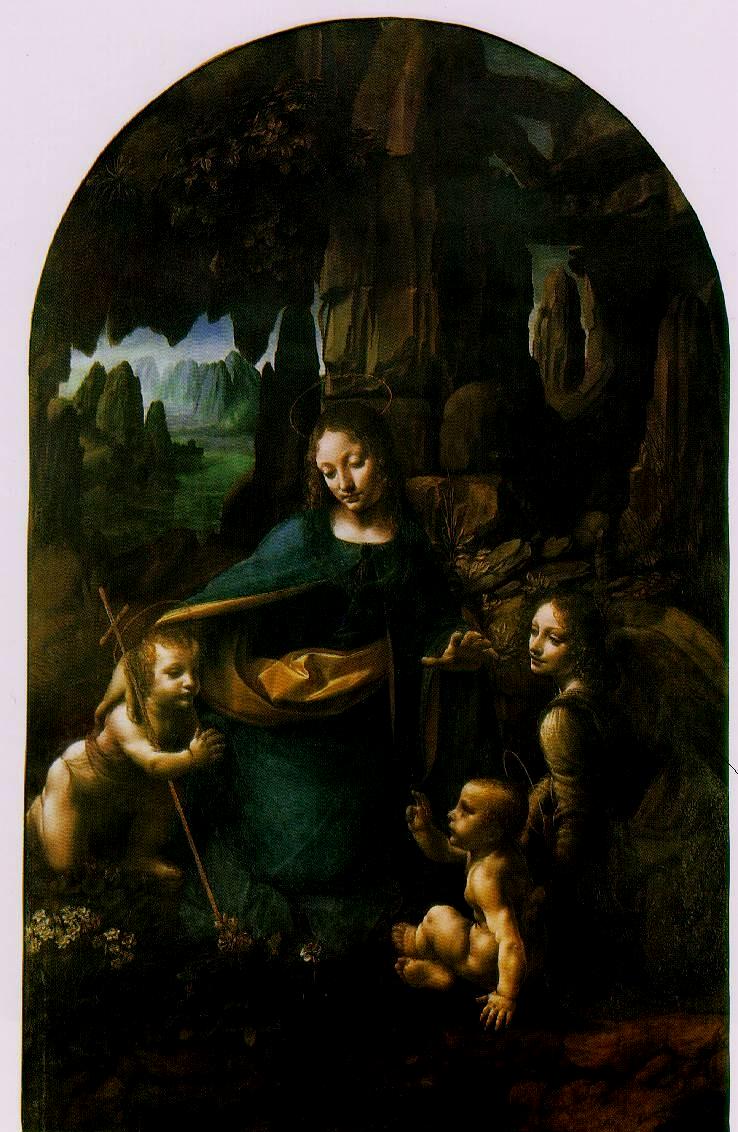
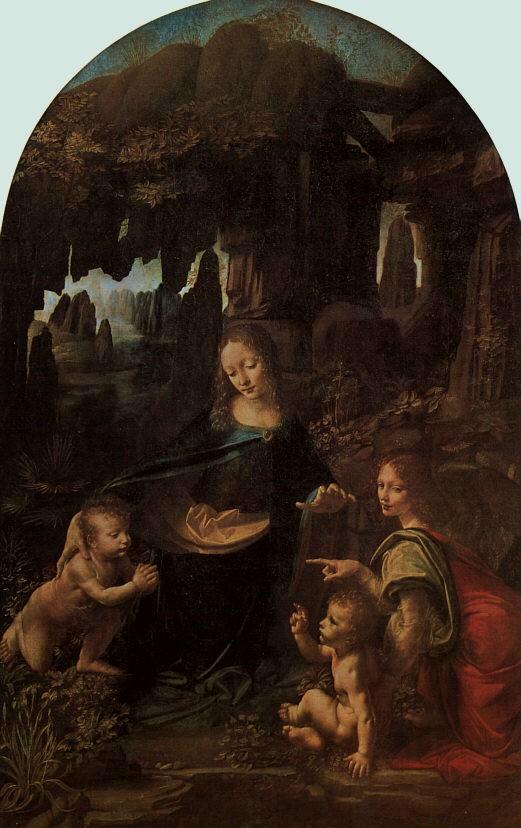
The most important of his own paintings during the early Milan period was The Virgin of the Rocks, two versions of which exist (1483-85, Louvre, Paris; 1490s to 1506-08, National Gallery, London); he worked on the compositions for a long time, as was his custom, seemingly unwilling to finish what he had begun.
The Last Supper
From 1495 to 1497 Leonardo labored on his masterpiece, The Last Supper, a mural in the refectory of the Monastery of Santa Maria delle Grazie, Milan. Unfortunately, his experimental use of oil on dry plaster was technically unsound, and by 1500 its deterioration had begun. Although much of the original surface is gone, the majesty of the composition and the penetrating characterization of the figures give a fleeting vision of its vanished splendor.
During his long stay in Milan, Leonardo also produced other paintings and drawings (most of which have been lost), theater designs, architectural drawings, and models for the dome of Milan Cathedral. His largest commission was for a colossal bronze monument to Francesco Sforza, father of Ludovico, in the courtyard of Castello Sforzesco.
In December 1499, however, the Sforza family was driven from Milan by French forces; Leonardo left the statue unfinished (it was destroyed by French archers, who used it as a target) and he returned to Florence in 1500.
Return to Florence
In 1502 Leonardo entered the service of Cesare Borgia, Duke of Romagna and son and chief general of Pope Alexander VI; in his capacity as the Duke's chief architect and engineer, Leonardo supervised work on the fortresses of the papal territories in central Italy.
In 1503 he was a member of a commission of artists who were to decide on the proper location for the David (1501-04, Accademia, Florence), the famous colossal marble statue by Michelangelo, and he also served as an engineer in the war against Pisa.
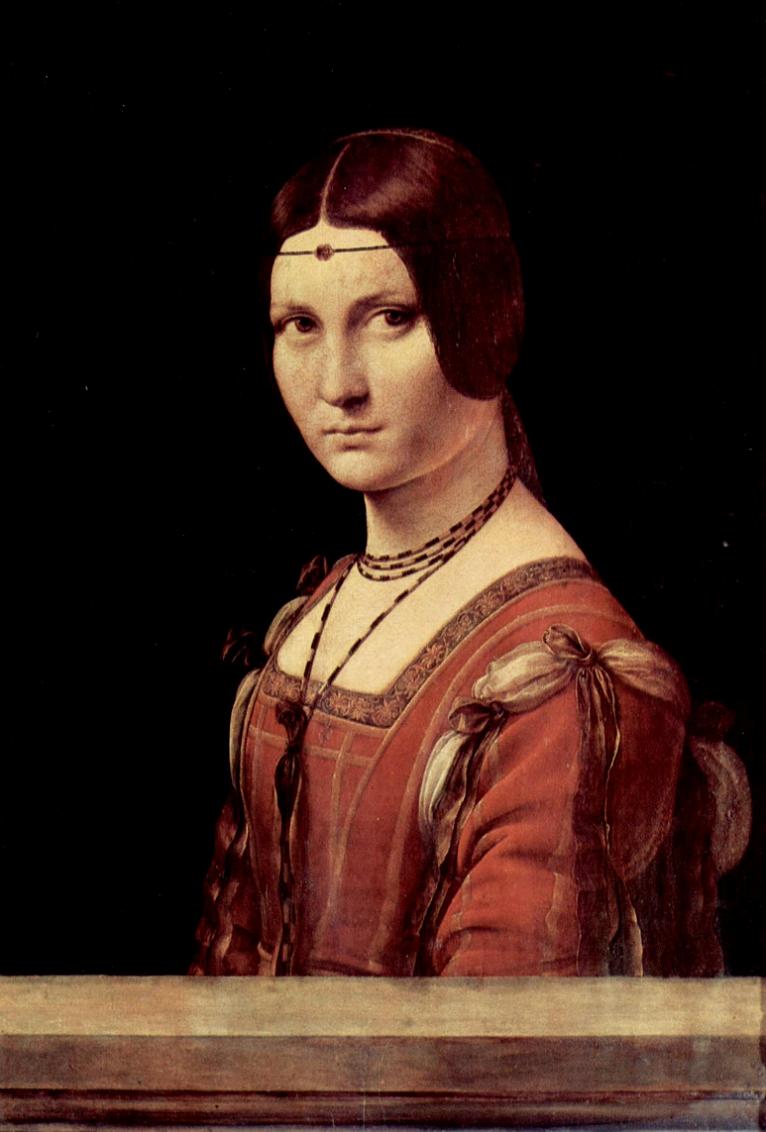
Porträt einer jungen Frau (La belle Ferronière), 1490-96
Leonardo da Vinci (Louvre Museum)
The Mona Lisa
During this second Florentine period, Leonardo painted several portraits, but the only one that survives is the famous Mona Lisa (1503-06, Louvre). One of the most celebrated portraits ever painted, it is also known as La Gioconda, after the presumed name of the woman's husband. Leonardo seems to have had a special affection for the picture, for he took it with him on all of his subsequent travels.
Final Years
In 1506 Leonardo went again to Milan, at the summons of its French governor, Charles d'Amboise. The following year he was named court painter to King Louis XII of France, who was then residing in Milan. For the next six years Leonardo divided his time between Milan and Florence.
From 1514 to 1516 Leonardo lived in Rome under the patronage of Pope Leo X: he was housed in the Palazzo Belvedere in the Vatican and seems to have been occupied principally with scientific experimentation.
In 1516 he traveled to France to enter the service of King François I. He spent his last years at the Château de Cloux (later called Clos-Lucé), near the King's summer palace at Amboise on the Loire, where he died on May 2, 1519.