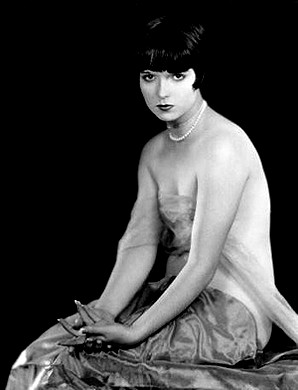
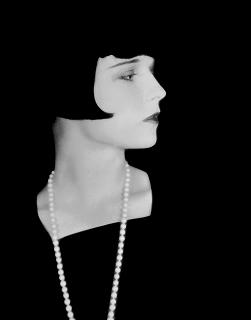
LOUISE BROOKS Biography (1906 - 1985) More: Details Icon. Biography | Gallery | Louise Brooks Film Posters/Photo Stills | Louise Brooks Video On Demand: Rent or Buy / Books / Dvds | Diary of a Lost Girl UK Dvd Review | Pandora's Box UK Dvd Review | G.W. Pabst | Pandora's Box | Search Site "Brooks made stills that were thirty years ahead of their time". Biography (Mary Louise Brooks) Louise Brooks made few films which are seldom seen, and by most accounts was difficult, a snob and a gossip. She exists in our minds as fragments, never whole, for she turned her life into a basis for speculation and conjuring. And yet, despite what little she left for us, her magical and ethereal presence continues to exert a hold on all who have ever glimpsed her on the big screen. In her last years, Louise Brooks did all that anoften bedridden old woman could manage tosecure her enigmatic reputation. She hadbeen a recluse in Rochester, New York, it wassaid. Her passions were arthritis and emphysema. But she had ended up there largelybecause of the admiration of James Card,curator of films at Eastman House. And shecould still draw men to upstate New York: Kenneth Tynan went there to write an affectionate and very influential essay for The NewYorker; Richard Leacock went to film her.And there were others. Before she died, Luluin Hollywood was published (with a WilliamShawn introduction). That gathering of essayswas intelligent, fascinating, cryptic, chilly, andcertainly more than most movie stars wouldthink of trying. But reliable, complete, honest? She had once written an autobiography, itwas claimed—Naked On My Goat—but onlybits survived after the book had been throwninto an incinerator—by its author, of course. After her death, Barry Paris wrote a careful,very useful biography in which lacunae werewonderfully bridged by breathtaking stills.(Brooks made stills that were thirty yearsahead of their time.) But Paris was attemptingto net a very elusive butterfly, as well as awoman who had brilliant instincts about modern publicity and cult obsession. Actress?Fleetingly. Playactor? Totally. She was alsoone of the first stars whose creativity was morbid, or self-destructive: she had a hunch that might last better than simple success. In Parade's Gone By, Kevin Brownlow told a delicious story of how Louise Brooks regretted the way Lotte Eisner had clarified an early description of her. In the first edition of Ecran Demoniaque, Eisner had written: "Was Louise Brooks a great artist or only a dazzling creature whose beauty leads the spectator to endow her with complexities which she herself was unaware?" Years later, Eisner had altered that passage to: "Today we know that Louise Brooks is an astonishing actress endowed with an intelligence beyond compare and not only a darling creature." Yet Brooks had rather preferred the earlier mystery. She was by then in Rochester, quoting Proust to eager interviewers, still seductive, still difficult, a snob and a gossip, and a connoisseur of her own mystique. She exists infragments that do not make a tidy whole. Justas she made few films, most of which are seldom seen, so she turned her life into a basis for speculation and conjuring. For example,for years Brooks alleged that she was concealing William Paley as her ex-lover and later patron—yet the cheerfully vain Paley wasbursting to be named as one of her conquests.The very rich man was magically the servantto the lost lady. At the age of fifteen she became a dancer,first with Ruth St. Denis, then in GeorgeWhite's Scandals and the Ziegfeld Follies.Paramount saw her and gave her a tiny part in The Street of Forgotten Men (25, HerbertBrenon). She made a flurry of comedies inwhich she was a capricious femme fatale playing with a reserve that unfailingly monopolized attention amid so much mugging: TheAmerican Venus (26, Frank Turtle); A SocialCelebrity (26, Malcolm St. Clair); It's the OldArmy Game (26), a W. C. Fields film directedby Edward Sutherland, to whom she wasbriefly married; The Show-Off (26, St. Clair); Just Another Blonde (26, Alfred Santell); Love'Em and Leave 'Em (26, Tuttle); EveningClothes (27, Luther Reed); Rolled Stockings (27, Richard Rossen); The City Gone Wild (27, James Cruze); Now We're in the Air (27, Frank Strayer); A Girl in Every Port (28,Howard Hawks); and Beggars of Life (28, William Wellman). There then occurred one of the fewinstances of an American going to Europe todiscover herself. G. W. Pabst saw A Girl inEvery Port and fixed on Brooks as the actressto play Wedekind's Lulu in Pandora's Box(29). Paramount objected but, undaunted, Brooks abandoned her contract and went toGermany. She has described the way Pabst protected her from xenophobia and obtainedso animated a performance from her. Hishunch that this American girl (only twenty-three) might understand the psychologicaltruths of sexual alertness was fulfilled—evenif it would be twenty-five years before theperformance was fully appreciated. Today, Brooks in close-up gives a sense of vivacious,fatal intimacy that enormously enriches Lulu'stragedy. Pandora's Box is still among the mosterotic films ever made—and it was more than Pabst would ever dare again. Immediately,she played in Pabst's Diary of a Lost Girl (29)and then returned to America. She had offended Paramount, but theexcursion had had much more serious effectson her. The studio asked her to dub TheCanary Murder Case (29, Tuttle and St.Glair), which had been made before herdeparture. She declined and went to France tomake Prix de Beaute (30, Augusto Genina).Back in Hollywood, her position had so deteriorated that she played in a two-reeler, WindyRiley Goes to Hollywood, directed by FattyArbuckle. It is by no means clear how she hadfallen from grace, but in 1931 she managedonly supporting parts in It Pays to Advertise (Turtle) and God's Gift to Women (Michael Curtiz). She resumed her dancing career, only to make a blighted comeback in the late 1930s inwhich she was wasted in small parts: Empty Saddles (36, Lesley Selander); When You're in Love (37, Robert Riskin); King of Gamblers (37, Robert Florey); and Overland State Riders (38, George Sberman). She made no more films and went gradually into a retreat from which she was recovered two decades later, by movie enthusiasts, her own articles in film journals, and the tribute to her made by Godard and Anna Karina in Vivre Sa Vie (62). Why is it that she exerts such influence still? In part, it is a cult superbly handled by the lady herself—so much more ingenious than the attempt Norma Desmond makes in Sunset Boulevard. But than that, she was one of the first performers to penetrate to the heart of screen acting. That original doubt of Lotte Eisner's applies not only to Louise Brooks but to all the great movie players. Quite simply, she appreciated that the power of the screen actress lay not in impersonation or performance, in the carefully worked-out personal narrative of stage acting, "but in the movement of thought and soul transmitted in a kind on intense isolation." An actress had fully to imagine the feelings of a character. And perhaps it was in imagining the self-consuming rapture of Lulu that Louise Brooks laid in store her own subsequent isolation. Louise Brooks autographs, photographs and more @ ebay.com (direct link to photographs) - just checked and a great selection Shop VIDEO ON DEMAND - RENT OR BUY / BOOKS / DVDS: Icon. Biography | Gallery | Louise Brooks Film Posters/Photo Stills | Louise Brooks Video On Demand: Rent or Buy / Books / Dvds | Diary of a Lost Girl UK Dvd Review | Pandora's Box UK Dvd Review | G.W. Pabst | Pandora's Box | Search Site | Top of Page © Lenin Imports E-mail |