|
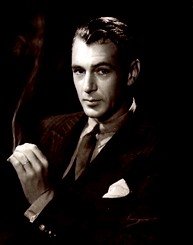
Gary Cooper
Search Site
Gary Cooper Dvds @ amazon.com (direct link)
Gary Cooper Biography Books @ amazon.com (direct link)
1901 - 1961.
More than any other actor, Gary Cooper
epitomized the quiet, staunch, gallant virtues
of the pioneer American as portrayed in the
cinema. The Western hero of The Virginian
(1929) and High Noon (1952) was, in principle,
not so different from the rebellious adventurer
of The Lives of a Bengal Lancer (1935) or the
hick-from-the-sticks who becomes a crusading
millionaire in Mr Deeds Goes to Town (1936).
Within a certain range, from comedy to
near-documentary drama, he was a peerless
film performer. Ernest Hemingway insisted he
play the lead in For Whom the Bell Tolls (1943)
because he was the perfect Hemingway hero, a
man who could fight the good fight and still
retain his own integrity and dignity.
'That fellow is the
world's greatest actor. He can do with no
effort what the rest of us spent years trying to
learn - to be perfectly natural.'
Certainly he was one of the first actors who
achieved an instant rapport with the camera.
At the height of his popularity in the Thirties
and Forties, he tended to be regarded as a
'personality' actor, who always played the
same role in different settings. Later, his performances were reassessed. Because he appeared so 'natural', the public and even the
critics believed he was simply playing himself.
But, as countless stars have said, playing
yourself is the most difficult art in the cinema.
'I saw a gunfight once; a couple of characters had had a fight, gone home and thought
about it, then they met up in town and shot it
out. My pal and I were standing on the street
outside the saloon. Darn near got shot, too.'
He never liked the idea of Westerns which
were based on the legend of the fastest draw:
'Wyatt Earp, now, he hardly ever shot a
man. But he frequently used to hit them
between the eyes with the butt of his pistol.
Don't know how he got away with it.'
He learned to sit tall in the saddle because of
a road accident which damaged his hip. The
doctor advised him that the best therapy would
be horse-riding, a pastime at which he
became skilled.
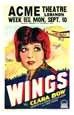
From 1925 Cooper appeared briefly in countless films. Then in 1927, Clara Bow - who had
been having a much-publicized romance with
Cooper - managed to secure him a minor role
in Wings, directed by William Wellman, where
he played an easy-going but doomed young
flyer in World War I. The idea of heroically
dying for one's country and the philosophy
that what will be will be, were easy for Cooper
to convey. In barely more than five minutes
screen time he communicated a magnetism that made the audience sit up and take notice.
'I like The Plainsman, the one I did for Cecil B. Demille. But, of course, it was romanticized. Wild Bill Hickok, the character I played, wasn't really a very nice man.'
He then co-starred with Marlene Dietrich in Morocco (1930) but loathed Josef von Sternberg who was only concerned about how his protegee, Dietrich, would look.
Hollywood really didn't know what to do with Cooper in the Thirties. Incredibly handsome, he also conveyed a toughness that was eveident in his eyes. Helen Hayes, who co-starred with him in the first film version of Hemingway's
A Farewell to Arms (1932) - remembers him as 'the most beautiful man I have ever met'.
In 1941 Cooper won his first Oscar for his
performance as the conscientious objector
who becomes a war hero in Sergeant York,
and in Ball of Fire (also 1941) he put his shy
manner to fine use in a comedy role in which
he played a meek professor researching slang
who pursues a gangster's moll and finds
himself in trouble.
The Fountainhead (1949), based on Ayn
Rand's novel about an idealistic architect and
his fight against big business, was a turning
point in his private life. Married to a New York
socialite Veronica Baife since 1933, he found himself in love with his co-star Patricia Neal,
but Cooper's wife - being an ardent Catholic -
would not give him a divorce. In 1951 the
romance, a very discreet affair, was over. In the
meantime Warners starred Cooper in action
films such as Task Force (1949), a routine naval
drama, because they felt that the public would
not accept Cooper in his usual spotless-hero
guise until the adverse publicity died down.
'It was just
a good story of the policeman who had to do a
job and the townsfolk who were prepared to let
him do it alone. But it was a good script and we had a fine director. Fred Zinnemann. I really
didn't see it as a psychological Western.'
In the last two years of his life he was surprised that he should be regarded as a Western
hero, not having made many Westerns.
He recalled with more affection films like The
Court-Martial of Billy Mitchell (1955), about an
American general brought before a judicial
court for accusing the war department of
criminal negligence, and Ten North Frederick
(1958), where the members of a dead man's
family look back on the events of his life. In
both films Cooper played characters wrestling
with the realities of contemporary life.
Before he died in 1961, he was awarded an
honorary Oscar for his services to the film
industry. As a screen actor, Cooper had the
same fundamental idea as all the great stars:
'You have to go through the mill first. It's
not good to become a big star with your first
film. An actor has to have lived a little.'
Cooper lived a lot and died too soon.
Gary Cooper Dvds @ amazon.com (direct link)
Gary Cooper Biography Books @ amazon.com (direct link)
Top of Page
|