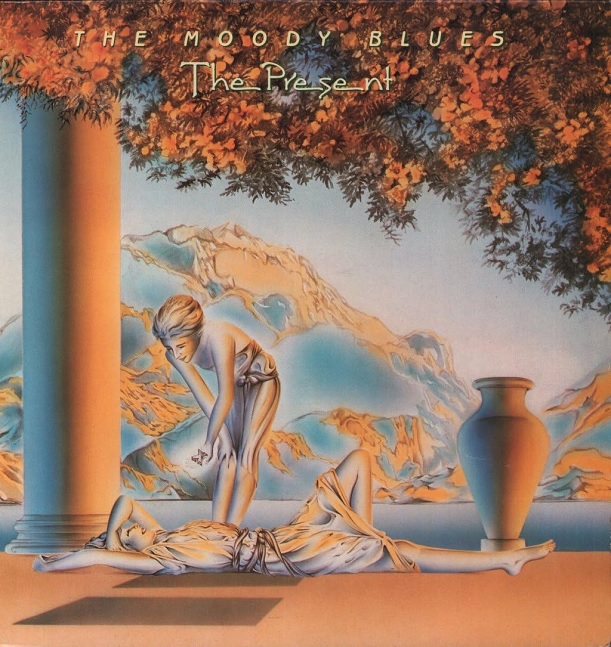
THE MOODY BLUES
Links
Buy
The Moody Blues Vinyl - direct link @ ebay.co.uk
(Lenin is a participant in the eBay (EPN) affiliate program)
The Moody Blues Fascinating Facts
Led Zeppelin Fascinating Facts
Joy Division Fascinating Facts
The Chameleons Fascinating Facts
Prefab Sprout Fascinating Facts
The Icicle Works Fascinating Facts
The Lotus Eaters Fascinating Facts
The Blue Nile Fascinating Facts
China Crisis Fascinating Facts
The Adventures Fascinating Facts
The Associates Fascinating Facts
Fiction Factory Fascinating Facts
Modern English Fascinating Facts
The Comsat Angels Fascinating Facts
The Railway Children Fascinating Facts
The Mighty Lemon Drops Fascinating Facts
The House of Love Fascinating Facts
A Flock of Seagulls Fascinating Facts
When in Rome Fascinating Facts
The Danse Society Fascinating Facts
The Passions Fascinating Facts
Joy Division Fascinating Facts
Human League Fascinating Facts
Visage / Steve Strange Fascinating Facts
Tears For Fears Fascinating Facts
Queen / Freddie Mercury Fascinating Facts
Danny Thompson Fascinating Facts
Talking Heads Fascinating Facts
Porcupine Tree Fascinating Facts
Adam and the Ants Fascinating Facts
Cabaret Voltaire Fascinating FactsMasami Tsuchiya Fascinating Facts
Kathleen Ferrier Fascinating Facts
Echo & The Bunnymen Fascinating Facts
The Chameleons Fascinating Facts
The Chameleons Fascinating Facts
Prefab Sprout Fascinating Facts
The Icicle Works Fascinating Facts
The Lotus Eaters Fascinating Facts
The Blue Nile Fascinating Facts
China Crisis Fascinating Facts
The Adventures Fascinating Facts
The Associates Fascinating Facts
Fiction Factory Fascinating Facts
Modern English Fascinating Facts
The Comsat Angels Fascinating Facts
The Railway Children Fascinating Facts
The Mighty Lemon Drops Fascinating Facts
The House of Love Fascinating Facts
A Flock of Seagulls Fascinating Facts
When in Rome Fascinating Facts
The Danse Society Fascinating Facts
The Passions Fascinating Facts
Joy Division Fascinating Facts
Queen / Freddie Mercury Fascinating Facts
Marc Bolan and T. Rex Fascinating Facts
Sting & The Police Fascinating Facts
Jean-Michel Jarre Fascinating Facts
Peter Gabriel Fascinating Facts
Holger Czukay Fascinating Facts
Anton Corbijn Fascinating Facts
Dexys Midnight Runners Fascinating Facts
Roxy Music / Bryan Ferry Fascinating Facts
Siouxsie and the Banshees Fascinating Facts
Elvis Presley Fascinating Facts
Scott Walker Fascinating Facts
Michael Brook Fascinating Facts
Penguin Cafe Orchestra Fascinating Facts
David Bowie Rarities (Shipped From UK)
Cocteau Twins Fascinating Facts
Ryuichi Sakamoto Fascinating Facts
Haruomi Hosono Fascinating Facts
Yukihiro Takahashi Fascinating Facts
Hector Zazou Fascinating Facts
Frank Auerbach Fascinating Facts
The Moody Blues
Artist
The Moody Blues
Content
All the fascinating facts
More
Bitesized
Year
1960s to Present Day
Random and bite-sized facts on all things on the mythical band The Moody Blues. Totally random but totally fascinating if you're into it. Do you know The Moody Blues now?
--
The band name began with a brewery sponsorship
The Moody Blues originally hoped to attract sponsorship from Mitchells & Butlers, a Birmingham brewery that owned numerous local venues. The proposed name was the M&B Five. When the sponsorship fell through, the initials survived in a different form, helping inspire the name The Moody Blues.
--
“Go Now” came from an American soul singer
The Moody Blues’ first major hit, “Go Now!”, was not an original composition. Denny Laine had heard the version recorded by American singer Bessie Banks and urged the band to record it. Their 1964 version became a UK chart-topper in early 1965, long before their later progressive-rock sound emerged.
--
A brutal review changed the band's direction
In 1966, the Moody Blues were still performing a cabaret-style show in matching blue suits, mixing rhythm and blues with comedy routines. After a performance at the Fiesta club in Stockton, a visitor told them they were the worst band he had ever seen. The criticism stayed with them, and they decided to abandon the old act and reinvent themselves.
--
Days of Future Passed began as a recording demonstration
Decca originally wanted the Moody Blues to record a rock version of Dvořák's New World Symphony to demonstrate its new stereo recording technology. Instead, the band developed their own songs into a musical journey through a day, with Peter Knight and the London Festival Orchestra providing orchestral passages between them. The result became one of their defining albums.
--
Mike Pinder helped convince the band of Nights in White Satin
Justin Hayward has recalled that the other Moody Blues members were initially unimpressed when he first played them “Nights in White Satin”. Mike Pinder's Mellotron contribution changed the song's impact, helping create the sweeping, orchestral sound that became one of the band's signatures.
--
I'm Just a Singer challenged the band's mystique
By the early 1970s, some fans treated the Moody Blues as though their atmospheric lyrics made them philosophers as well as musicians. John Lodge responded with “I'm Just a Singer (In a Rock and Roll Band)”, a song that pushed back against the idea that the group possessed special answers about life. It became one of his best-known compositions for the band.
--
The band toured in a Boeing 707 with a fireplace
During the 1973 tour supporting Seventh Sojourn, the Moody Blues travelled in their own Boeing 707. John Lodge later recalled that it had a sitting room with a fireplace, two bedrooms, around twenty individual televisions and a personal butler. Despite the luxury, he remembered feeling uncomfortable about how excessive their lifestyle had become.
--
THE MOODY BLUES
Links
Buy
The Moody Blues Japanese Vinyl - direct link @ ebay.co.uk
(Lenin is a participant in the eBay (EPN) affiliate program)
--
Justin Hayward wrote the song at nineteen
In early 1967, Justin Hayward returned from a gig to his one-room flat and sat on the edge of his bed with a 12-string acoustic guitar. He wrote the song’s basic two verses and two choruses that evening, taking it to the Moody Blues’ rehearsal room the following day. The other members were initially unconvinced.
--
Mike Pinder’s Mellotron changed the song
When Hayward first played “Nights in White Satin” to the band, the response was lukewarm. Keyboard player Mike Pinder asked him to play it again and added the now-famous Mellotron phrase. Hayward later recalled that this was the moment the song began to make sense to the others.
--
The title carries a second meaning
The title “Nights in White Satin” was more than a romantic image for Hayward. He later explained that it deliberately carried a second meaning, suggesting medieval knights as well as nights. The wordplay adds another layer to a song that has often been interpreted as a straightforward declaration of love.
--
The London Festival Orchestra was a made-up name
The orchestral passages on the recording were performed by session musicians assembled by arranger Peter Knight. Justin Hayward revealed that “The London Festival Orchestra” was a name invented for the album rather than an established orchestra. The musicians were brought together for the sessions, with their parts recorded over the band’s existing tracks.
--
Late Lament was written to complete a bigger story
The spoken-word passage heard near the end of the album version was written by drummer Graeme Edge. He wanted to contribute something that would help bring together the narrative of Days of Future Passed, which follows the course of a day. Mike Pinder delivered the recitation, giving the song its reflective closing section.
--
THE MOODY BLUES
Links
Buy
The Moody Blues Japanese Vinyl - direct link @ ebay.co.uk
(Lenin is a participant in the eBay (EPN) affiliate program)
--
Buddy Holly inspired him to become a musician
Justin Hayward got his first guitar when he was ten years old and persuaded a few schoolmates to form a group. But it was hearing Buddy Holly that made everything fall into place. Hayward later recalled that Holly’s music gave him a clear idea of what he wanted to do with his life.
--
Lonnie Donegan signed him as a songwriter
Before joining the Moody Blues, Hayward had already signed a publishing deal with skiffle star Lonnie Donegan. He was still a teenager, and the agreement reflected his ambition to write songs rather than remain solely a guitarist and vocalist. His career as a professional musician was already under way before the Moody Blues came calling.
--
Marty Wilde encouraged him to write songs
After leaving school, Hayward answered an advertisement in Melody Maker and successfully auditioned to play guitar for Marty Wilde. He recorded with Wilde’s backing group, the Wilde Three, and performed with them at the London Palladium. Hayward later credited Wilde with advising him to develop his own style and write his own material if he wanted a lasting career in music.
--
His original twelve-string guitar was missing for 45 years
The twelve-string guitar Hayward played on the Moody Blues’ Days of Future Passed was later “borrowed” and never returned. Decades passed before he was able to buy the instrument back. In a fan Q&A, he said it had finally come home to him 45 years after it disappeared from his possession.
--
A specially designed writing space left him uninspired
Hayward discovered that building the ideal environment for songwriting did not guarantee that a song would appear. He once tried creating a house with everything he thought a writer might need, but found he could not write there at all. He explained that a small, dark corner — or even a broom cupboard — could prove far more inspiring.
--
A roadie found a recording of Blue Guitar that he thought was lost
Hayward believed the original stereo mix of “Blue Guitar”, recorded with 10cc at Strawberry Studios around 1974–75, had disappeared. While compiling his solo collection All the Way, a roadie discovered a tape in storage containing three tracks written by Hayward and recorded with 10cc. The first one they played was Eric Stewart’s original mix of “Blue Guitar”. Hayward described the discovery as the most exciting part of the project.
--
A record-shop employee persuaded him to sing Forever Autumn
When Jeff Wayne sent Hayward a demo of “Forever Autumn” for The War of the Worlds, Hayward was not immediately convinced it suited him. He played it at home, where a young employee from the Moody Blues’ Threshold Records shop in Cobham heard it and urged him to take the opportunity. Hayward later said that the unexpected encouragement persuaded him to go ahead with the recording.
--
THE MOODY BLUES
Links
Buy
The Moody Blues Japanese Vinyl - direct link @ ebay.co.uk
(Lenin is a participant in the eBay (EPN) affiliate program)
--
He originally wanted to work in engineering
Growing up in Birmingham, John Lodge was initially more interested in automotive design and mechanical engineering than music. At school, he found classical music played during quiet periods uninspiring. It was the arrival of skiffle and then American rock ’n’ roll that made him want to become a musician.
--
His school nickname changed from Skiff to Rocker
When Lodge began learning guitar through skiffle songs, his schoolmates nicknamed him “Skiff”. Once he moved on to rock ’n’ roll at around fifteen, they started calling him “Rocker” instead. Ray Thomas continued using that nickname for his lifelong friend, even decades later.
--
He taught Ray Thomas to drive
Lodge first met Ray Thomas when they were both teenagers, and the two became close friends long before the Moody Blues took shape. Lodge later recalled teaching Thomas to drive, admitting that he wasn't particularly good at it. Their parents also became friends and went on holidays together.
--
His first bass was an unusual model called the Tuxedo
Lodge bought his first bass in 1959. It was called a Tuxedo Bass, an instrument he later said he had never managed to find another example of. He subsequently owned a Hofner President bass, but what he really wanted was a Fender Precision.
--
One Fender Precision bass became part of his musical history
In January 1960, Lodge spotted a sunburst Fender Precision bass in the window of his regular Birmingham music shop. His father helped him buy it. Lodge later said that the instrument appeared on nearly every Moody Blues recording he made, as well as the entire Blue Jays album he recorded with Justin Hayward during the band's hiatus.
--
He took inspiration from Motown's bass players
Lodge admired the way James Jamerson's bass playing drove so many Motown recordings. He also singled out Carol Kaye, whose playing helped him think about how the bass could propel a song rather than simply follow its chords. That rhythmic approach became a major part of his own style with the Moody Blues.
--
Peak Hour began with a rhythm in the band's van
Lodge remembered sitting in the Moody Blues' van while drummer Graeme Edge tapped out a fast rhythm. He asked Edge to keep the tempo going for about three minutes because he had an idea for a song. That became the foundation of “Peak Hour”, which then shifts into a much quieter, cathedral-like section before returning to its rock arrangement.
--
Isn't Life Strange took shape during dinner
British musical-theatre composer Lionel Bart encouraged Lodge to buy a baby grand piano like the one Bart used for writing. One evening, while Lodge was having dinner with his wife and friends, a melody came into his head. He left the table, sat at the piano and developed the music and title of “Isn't Life Strange” in about fifteen minutes, before returning to his meal.
--
I'm Just a Singer was partly inspired by a Vietnam War photograph
Lodge wrote “I'm Just a Singer (In a Rock and Roll Band)” partly because he felt people were looking to musicians for answers to life's big questions. He also recalled being deeply affected by the famous photograph of a young Vietnamese girl running after a napalm attack. That image inspired the song's reference to “scorching the earth”.
--
He never toured his first solo album
Lodge released Natural Avenue in 1977, during the Moody Blues' hiatus. He assembled a band and planned to tour the album, but the Moody Blues reunited to record Octave. He chose to return to the group instead, later explaining that he had regretted missing the chance to perform his solo material live.
--
THE MOODY BLUES
Links
Buy
The Moody Blues Japanese Vinyl - direct link @ ebay.co.uk
(Lenin is a participant in the eBay (EPN) affiliate program)
--
He was born in a wartime maternity refuge
Ray Thomas was born in December 1941 at Lickhill Manor in Stourport-on-Severn. During the Second World War, the building was commandeered to accommodate expectant mothers moved away from the bombing raids on Birmingham. It was not his family's home, but a temporary maternity refuge created by wartime conditions.
--
His father taught him the harmonica at nine
Thomas's father introduced him to the harmonica when he was nine years old. A year later, he joined his school choir. Although he became best known for playing flute with the Moody Blues, singing and harmonica playing were important parts of his musical development long before the band formed.
--
His first band featured a tea-chest bass
Thomas joined the skiffle group the Saints and Sinners in 1958, playing tea-chest bass, a homemade instrument in which a string is attached to a wooden chest and plucked to produce a bass sound. The following year he moved into El Riot and the Rebels, where he sang and played harmonica alongside future Moody Blues colleagues Mike Pinder and John Lodge.
--
His stage entrance once demolished a row of tulips
While performing with El Riot and the Rebels, Thomas developed a dramatic entrance in which he slid across the stage on his knees. The move became part of his act, but it occasionally went wrong. He later recalled once taking out an entire row of potted tulips during a performance.
--
He and Mike Pinder ran out of money in Hamburg
Before the Moody Blues existed, Thomas and Mike Pinder played together in the Krew Cats at Hamburg's Top Ten Club in 1963. The engagement did not pay enough to sustain them, and the pair ended up virtually penniless. They approached the British authorities for help getting home, an experience that became part of the pair's early musical education.
--
His first recorded flute part used an alto flute
Thomas's first recorded flute performance with the Moody Blues came on “From the Bottom of My Heart”, released in 1965. He played an alto flute on the track. At this stage the instrument was not yet the defining feature of the band's sound that it would become on their later psychedelic and progressive recordings.
--
“Legend of a Mind” was meant as a joke about Timothy Leary
Thomas wrote “Legend of a Mind”, the psychedelic-era song about Timothy Leary, partly as a satire rather than a straightforward tribute. He had read Leary's work and turned the American psychologist's experiments with consciousness into a playful, cosmic portrait. Thomas later met Leary several times, and recalled Leary telling him that the song had made him more famous than he had made himself.
--
A family memory became “Eternity Road”
Thomas drew the starting point for “Eternity Road” from memories of sheltering during wartime air raids. His grandmother and two neighbours had a habit of announcing what they heard or sensed in the sky, using the phrases “Hark”, “Listen” and “Here he comes”. The expressions stayed in his mind and eventually found their way into his songwriting.
--
He rarely performed “For My Lady” live for years
Although Thomas wrote and sang “For My Lady” on the Moody Blues' 1972 album Seventh Sojourn, he did not regularly perform it live. He recalled that the first time he really sang it onstage was during the band's performance with the Colorado Symphony Orchestra at Red Rocks in 1992. The orchestral setting finally made it possible to bring the song into the live set.
--
He linked three songs into a single suite
On the 1981 album Long Distance Voyager, Thomas connected “Painted Smile”, “Reflective Smile” and “Veteran Cosmic Rocker” into a three-part sequence. He described it as two songs and a poem joined together. The suite gave his writing a prominent place near the end of an album otherwise associated with the band's new, post-Mike Pinder sound.
--
THE MOODY BLUES
Links
Buy
The Moody Blues Japanese Vinyl - direct link @ ebay.co.uk
(Lenin is a participant in the eBay (EPN) affiliate program)
--
He worked at the Mellotron factory
Before the Moody Blues became famous for their orchestral sound, Mike Pinder worked for 18 months at Streetly Electronics in Birmingham, the company that manufactured the Mellotron. He worked in quality control and testing, learning how the complicated tape-based keyboard was assembled and how to keep it running. That experience later proved invaluable on stage and in the recording studio.
--
He removed the Mellotron's novelty sounds
The Mellotron originally contained all sorts of sound effects, including train whistles and a cock crowing. Pinder removed these tapes and replaced the rhythm and fill sounds with additional musical recordings. This allowed him to combine different instrumental textures and create the sweeping, layered sound that became central to the Moody Blues' records.
--
The band's first Mellotron single was his own song
“Love and Beauty”, released in 1967, was the first Moody Blues recording to feature the Mellotron. Pinder wrote and sang the song, which combined a bright psychedelic mood with the new keyboard's unusual textures. It was also his only A-side single with the band after their original rhythm-and-blues period ended.
--
He found the band's Mellotron at a tyre factory
Pinder located a second-hand Mellotron Mark II at the recreation centre of the Dunlop tyre factory in Birmingham. Nobody there knew how to use the instrument. Having already worked at the factory that made them, Pinder recognised its potential and acquired it for the band, giving them access to a sound that would help define their next phase.
--
The Mellotron broke apart during the band's first American concert
The Mellotron was notoriously temperamental, and Pinder's technical skills were tested at the Moody Blues' first American concert. When the band struck their first harmony, the back of the instrument opened and its tape strips spilled out. Pinder fetched his toolbox and repaired it in about twenty minutes while the lighting crew entertained the audience with cartoons.
--
Jimmy Durante helped inspire an album title
Pinder came up with the title In Search of the Lost Chord after recalling a song by entertainer Jimmy Durante called “I'm the Guy Who Found the Lost Chord”. Pinder explained that the band would discuss possible album titles once several tracks had been recorded, and he often found himself suggesting the title that best captured the music's direction.
--
A B-side won him an Ivor Novello Award
Pinder's “A Simple Game” was released as the B-side of “Ride My See-Saw” in 1968. Although it was not the headline single, the composition earned him an Ivor Novello Award. The song later attracted the attention of the Four Tops, who recorded their own version, bringing Pinder's writing to a different audience.
--
Justin Hayward once sang his song on a lost single candidate
The Moody Blues recorded an alternative version of “A Simple Game” in October 1968, with Justin Hayward singing lead instead of Pinder. The group considered it as a possible single, but it was not released at the time. The unusual version remained unavailable until it appeared as a bonus track on a remastered CD of In Search of the Lost Chord in 2006.
--
Melancholy Man topped the chart in France
“Melancholy Man”, written and sung by Pinder on the 1970 album A Question of Balance, became a number-one hit in France when released as a single there. Its reflective lyrics and atmospheric keyboard arrangement showed a quieter side of the Moody Blues, distinct from the heavier sound of some of their other recordings.
--
He played tambourine on John Lennon's Imagine
Pinder appeared on John Lennon's 1971 album Imagine, contributing to “Jealous Guy” and “I Don't Wanna Be a Soldier”. He had intended to use Lennon's Mellotron, but found its tape mechanisms in such a tangled state that he described them as looking like “a bowl of spaghetti”. He played tambourine instead.
--
THE MOODY BLUES
Links
Buy
The Moody Blues Japanese Vinyl - direct link @ ebay.co.uk
(Lenin is a participant in the eBay (EPN) affiliate program)
--
He became a drummer almost by accident
Graeme Edge initially managed the Blue Rhythm Band rather than playing drums professionally. The group stored its equipment at his parents’ house, where he could watch the drummer practise. When that drummer left, Edge filled in for three weeks. He then bought his own drum kit and committed himself to playing.
--
He trained as a draughtsman
Before music became his full-time career, Edge trained as a draughtsman, studying technical drawing and design estimating for structures such as bridges. He eventually abandoned that professional route as the opportunities for playing in Birmingham bands became more attractive.
--
Roy Wood briefly played in one of his early bands
Before the Moody Blues, Edge played in Gerry Levene and the Avengers, a group that included a young Roy Wood, later a founder member of the Move and Wizzard. The Avengers released a single for Decca and appeared on the television pop programme Thank Your Lucky Stars before the group broke up in 1964.
--
He drummed behind Jimi Hendrix and Eric Clapton
Edge once recalled an extraordinary night at the Scotch of St James club in London. After the resident band finished, he went onstage with bassist Jack Bruce while Eric Clapton and Jimi Hendrix traded guitar passages. Chas Chandler, Hendrix’s manager, had introduced Hendrix to the group. Edge remembered the musicians inspiring each other as they improvised.
--
He was writing poetry at eight
Edge told Modern Drummer magazine that he had always written poetry. At the age of eight, he produced a school composition in rhyme. His writing eventually became an unexpected part of the Moody Blues’ identity, giving their albums spoken passages as well as songs.
--
Morning Glory and Late Lament began on a cigarette packet
While being driven to a gig in a Volkswagen van during the Days of Future Passed period, Edge wrote ideas for the poems on the inside of a cigarette packet. The material became “Morning Glory” and “Late Lament”, which frame the album’s journey through the day. The writing began as a practical attempt to fill a gap in the record’s concept.
--
The band thought his lyrics contained too many words
Edge originally tried to write conventional song lyrics, but his bandmates felt there were too many words to sing naturally. Rather than abandoning the material, he was encouraged to turn it into poetry. Mike Pinder’s spoken delivery of the pieces became one of the group’s distinctive features, beginning on Days of Future Passed.
--
He helped develop an early electronic drum kit
For “Procession”, on the 1971 album Every Good Boy Deserves Favour, Edge used an unusual electronic drum kit he developed with Brian Groves, a professor of electronics at the University of Sussex. Its touch-sensitive rubber pads and transistor-based circuitry were far removed from modern electronic drums, and Edge described the complicated internal wiring as resembling spaghetti.
--
He was especially proud of the drumming on Legend of a Mind
Edge singled out “Legend of a Mind” as one of his favourite Moody Blues drum performances. He particularly admired the transition into the Indian-influenced section, where the rhythm changes from a conventional four-beat feel into a more unusual pattern. He felt the change worked so smoothly that listeners might not notice the shift in meter.
--
Ginger Baker appeared on his solo album
During the Moody Blues’ mid-1970s break, Edge formed the Graeme Edge Band with brothers Adrian and Paul Gurvitz. Their 1975 album, Kick Off Your Muddy Boots, featured a guest appearance by Ginger Baker, the Cream drummer whom Edge greatly admired. It gave him an opportunity to explore music outside the Moody Blues’ distinctive progressive-rock sound.
--
A voyage around the world influenced Paradise Ballroom
During the Moody Blues’ hiatus, Edge lived for a time on the Greek island of Corfu aboard his 70-foot yacht, Delia, and sailed around the world. His travels through the Caribbean exposed him to salsa, calypso, samba and reggae rhythms. Those influences fed into his second solo album, Paradise Ballroom, released in 1977.
--
THE MOODY BLUES
Links
Buy
The Moody Blues Japanese Vinyl - direct link @ ebay.co.uk
(Lenin is a participant in the eBay (EPN) affiliate program)
--
He first joined the Moodies as a rhythm-and-blues singer
Denny Laine helped establish the Moody Blues' original identity as a Birmingham rhythm-and-blues group. He later explained that the band deliberately sought out obscure American blues and R&B songs rather than relying only on familiar hits. They absorbed those influences and adapted them into their own sound.
--
He spotted the potential of Bessie Banks's Go Now
Laine was the lead vocalist on the Moody Blues' breakthrough single “Go Now”, but he did not write it. After hearing Bessie Banks's original recording, he immediately told the other members that they should record the song themselves. Their version became a British number-one hit in early 1965.
--
Chuck Berry borrowed his guitar amplifier
During the Moody Blues' tour with Chuck Berry, Laine had a new amplifier that caught the American guitarist's attention. Berry had brought his guitar but no amplifier of his own, so he borrowed Laine's. Laine later remembered the incident as one of the memorable details of the tour during which “Go Now” reached number one.
--
Their very first single had a Laine and Pinder original on its reverse
The Moody Blues made their recording debut in 1964 with a cover of Bobby Parker's “Steal Your Heart Away”. Its B-side, “Lose Your Money (But Don't Lose Your Mind)”, was an original co-written by Laine and Mike Pinder. The single failed to chart, but it established the songwriting partnership that would contribute heavily to their debut album.
--
Mike Pinder helped him turn ideas into finished songs
Laine later described himself as an inexperienced songwriter when the Moody Blues began recording their first album. He said he would bring musical ideas to Pinder, who helped work on the arrangements and shape them into complete songs. The partnership produced much of the original material on The Magnificent Moodies.
--
The band was still writing original singles after Go Now
Laine and Pinder continued writing together after “Go Now” became a hit. Their composition “From the Bottom of My Heart (I Love You)” was released as a single in 1965 and reached number 22 in the UK. It showed that the band's early career was not built entirely around covers of American R&B songs.
--
A second album was being prepared before he left
In 1966, the Moody Blues were working on a follow-up to The Magnificent Moodies, provisionally titled Look Out!. Much of the intended album consisted of original songs by Laine and Pinder. The project was abandoned as the original line-up began to break apart, and several of the recordings remained unheard officially for decades.
--
Some of his unfinished Moody Blues recordings appeared decades later
Material from the abandoned Look Out! sessions eventually resurfaced on the expanded 2014 edition of The Magnificent Moodies. Tracks such as “Jago & Jilly” and “We're Broken” offered listeners a glimpse of the group's intended next phase, with Laine still at the centre of the band's songwriting and vocals.
--
His final Moody Blues single came out after his departure
“Life's Not Life”, co-written by Laine and Pinder, was recorded in September 1966 with Laine on lead vocals. By the time it was released in January 1967, Laine had already left the group and Justin Hayward and John Lodge had joined. The record therefore belongs to the original era even though it appeared after the line-up had changed.
--
His experimental string band helped lead him towards Wings
After leaving the Moody Blues, Laine formed the Electric String Band, combining a conventional rock group with violins and cellos. He later recalled performing with Jimi Hendrix at London's Saville Theatre. Paul McCartney saw Laine's experimental approach and, when he began putting Wings together in 1971, approached him about joining.
--
THE MOODY BLUES
Links
Buy
The Moody Blues Japanese Vinyl - direct link @ ebay.co.uk
(Lenin is a participant in the eBay (EPN) affiliate program)
--
He was reportedly born on an aeroplane
Patrick Moraz’s official biography states that he was born aboard an aeroplane on 24 June 1948. Morges in Switzerland is often cited as his hometown, but his unusual arrival into the world is one of the more surprising details in the story of the classically trained musician who later joined Yes and the Moody Blues.
--
He was composing piano music at five
Moraz grew up in a musical family and began composing for the piano when he was five years old. He studied classical music and jazz before pursuing a professional career, eventually attending the Lausanne Conservatory. His musical background extended well beyond the rock keyboard playing for which he became internationally known.
--
A roller-skating accident threatened his musical future
At thirteen, Moraz broke four fingers in a roller-skating accident. He was reportedly told that he might never play classical music again. Through extensive practice, including working with his left hand, he recovered his technique and developed an unusual degree of facility with both hands.
--
He worked as a scuba-diving instructor for Salvador Dalí’s circle
In 1964, Moraz travelled to Cadaqués in Spain, where he worked as a scuba-diving instructor and helped organise musical events. This brought him into contact with Salvador Dalí, who lived nearby at Portlligat. Moraz was welcomed onto the artist’s property, organised parties and spent time around Dalí and his wife Gala.
--
He opened concerts for John Coltrane
Moraz’s early career was rooted in jazz. At sixteen, he became the youngest recipient of the Best Soloist award at the Zürich Jazz Festival. His jazz groups went on to win awards at the festival over several consecutive years, and he later performed as an opening act on a European tour headlined by saxophonist John Coltrane.
--
He recorded his debut solo album with sixteen Brazilian percussionists
For his 1976 solo album, commonly known as The Story of I, Moraz travelled through South America before gathering sixteen percussionists in Rio de Janeiro. He recorded their rhythms in real time and built the album around those performances, combining Brazilian percussion with orchestral ideas and progressive rock. Synthesizer pioneer Bob Moog also contributed sounds to the project.
--
His Yes audition used Vangelis’s keyboards
When Moraz auditioned for Yes in 1974, he used the keyboards Vangelis had left behind after his own unsuccessful audition. Moraz had to tune the instruments before playing. He was asked to devise an introduction for “Sound Chaser”, and the section he created became part of the finished album Relayer.
--
He auditioned for the Moody Blues over the telephone
In 1978, Moraz received a call asking him to consider joining the Moody Blues after Mike Pinder’s departure. While he was in Miami, he was asked to sing “Nights in White Satin” and “Tuesday Afternoon” down the telephone. He travelled to London for an audition and recalled getting the job that very afternoon.
--
He took four Mellotrons on stage with the Moody Blues
Moraz recalled that he toured with four Mellotrons when he joined the Moody Blues. Each instrument used tapes to reproduce recorded sounds, making the Mellotron an early form of sampler. Moraz also used an array of synthesizers and electric pianos, bringing a more electronic keyboard palette to the band’s live performances and later recordings.
--
The opening of The Voice was originally much longer
Moraz had composed a long, orchestral-style instrumental passage before it became the short introduction to “The Voice” on Long Distance Voyager. The band wanted only about thirty seconds, so he agreed to cut it down. He recalled that his first take on the keyboard overdubs was the one that remained on the record.
--
Search Keywords
The Moody Blues
Icon
Icons
THE MOODY BLUES
Links
Buy
The Moody Blues Vinyl - direct link @ ebay.co.uk
(Lenin is a participant in the eBay (EPN) affiliate program)
The Moody Blues Fascinating Facts
Led Zeppelin Fascinating Facts
Human League Fascinating Facts
Cabaret Voltaire Fascinating Facts
Joy Division Fascinating Facts
Visage / Steve Strange Fascinating Facts
Tears For Fears Fascinating Facts
Siouxsie and the Banshees Fascinating Facts
Queen / Freddie Mercury Fascinating Facts
Danny Thompson Fascinating Facts
Talking Heads Fascinating Facts
Kathleen Ferrier Fascinating Facts
Echo & The Bunnymen Fascinating Facts
Porcupine Tree Fascinating Facts
Adam and the Ants Fascinating Facts
Visage / Steve Strange Fascinating FactsTears For Fears Fascinating Facts
Queen / Freddie Mercury Fascinating Facts
Masami Tsuchiya Fascinating Facts
Marc Bolan and T. Rex Fascinating Facts
Sting & The Police Fascinating Facts
The Chameleons Fascinating Facts
The Chameleons Fascinating Facts
Prefab Sprout Fascinating Facts
The Icicle Works Fascinating Facts
The Lotus Eaters Fascinating Facts
The Blue Nile Fascinating Facts
China Crisis Fascinating Facts
The Adventures Fascinating Facts
The Associates Fascinating Facts
Fiction Factory Fascinating Facts
Modern English Fascinating Facts
The Comsat Angels Fascinating Facts
The Railway Children Fascinating Facts
The Mighty Lemon Drops Fascinating Facts
The House of Love Fascinating Facts
A Flock of Seagulls Fascinating Facts
When in Rome Fascinating Facts
The Danse Society Fascinating Facts
The Passions Fascinating Facts
Joy Division Fascinating Facts
Jean-Michel Jarre Fascinating Facts
Peter Gabriel Fascinating Facts
Holger Czukay Fascinating Facts
Anton Corbijn Fascinating Facts
Dexys Midnight Runners Fascinating Facts
Roxy Music / Bryan Ferry Fascinating Facts
Elvis Presley Fascinating Facts
Scott Walker Fascinating Facts
Michael Brook Fascinating Facts
Penguin Cafe Orchestra Fascinating Facts
David Bowie Rarities (Shipped From UK)
Cocteau Twins Fascinating Facts
Roxy Music / Bryan Ferry Fascinating Facts
Ryuichi Sakamoto Fascinating Facts
Haruomi Hosono Fascinating Facts
Yukihiro Takahashi Fascinating Facts
Hector Zazou Fascinating Facts
Frank Auerbach Fascinating Facts